
Camera traps for wildlife monitoring
EVOLVEO StrongVision PRO 4G
EVOLVEO StrongVision PRO 4G
Image source: © Majdis 2025 All rights reserved
Content
Motion-activated camera trap for remote, non-invasive wildlife and visitor monitoring providing valuable data on species presence, abundance, activity patterns, and behaviour over time.
Classification
18
8
Study object
Animals
Habitats
Humans
Indicators
Birds
Mammals
Forest
Rocky
Grassland
Savanna
Desert
Wetlands
Shrubland
Hikers
Bikers
Skiers / Snowboarders
Caves
Climbers
Motor vehicles
Other vertebrates
Other
Other
Study focus
Anthropogenic factors and impacts
Biodiversity (Species populations and Community Composition)
Precise focus
Species abundance
Species identification
Species disturbances (invasive species, etc.)
Visitor Monitoring (distribution, economics and profiling)
Species distributions
Community abundance
Species diversity
Behaviour
Key characteristics
Work step
Data collection
Tool purpose
Photo/Video Data
Properties
Classic
Professional
Keywords
Species recording
HUMANITA
Activity patterns
Disturbance
Wildlife
Tool description
Camera traps are widely used in biodiversity monitoring, species presence detection, behavioral observation, human–wildlife interaction studies, and visitor impact assessment, particularly in remote or sensitive habitats.
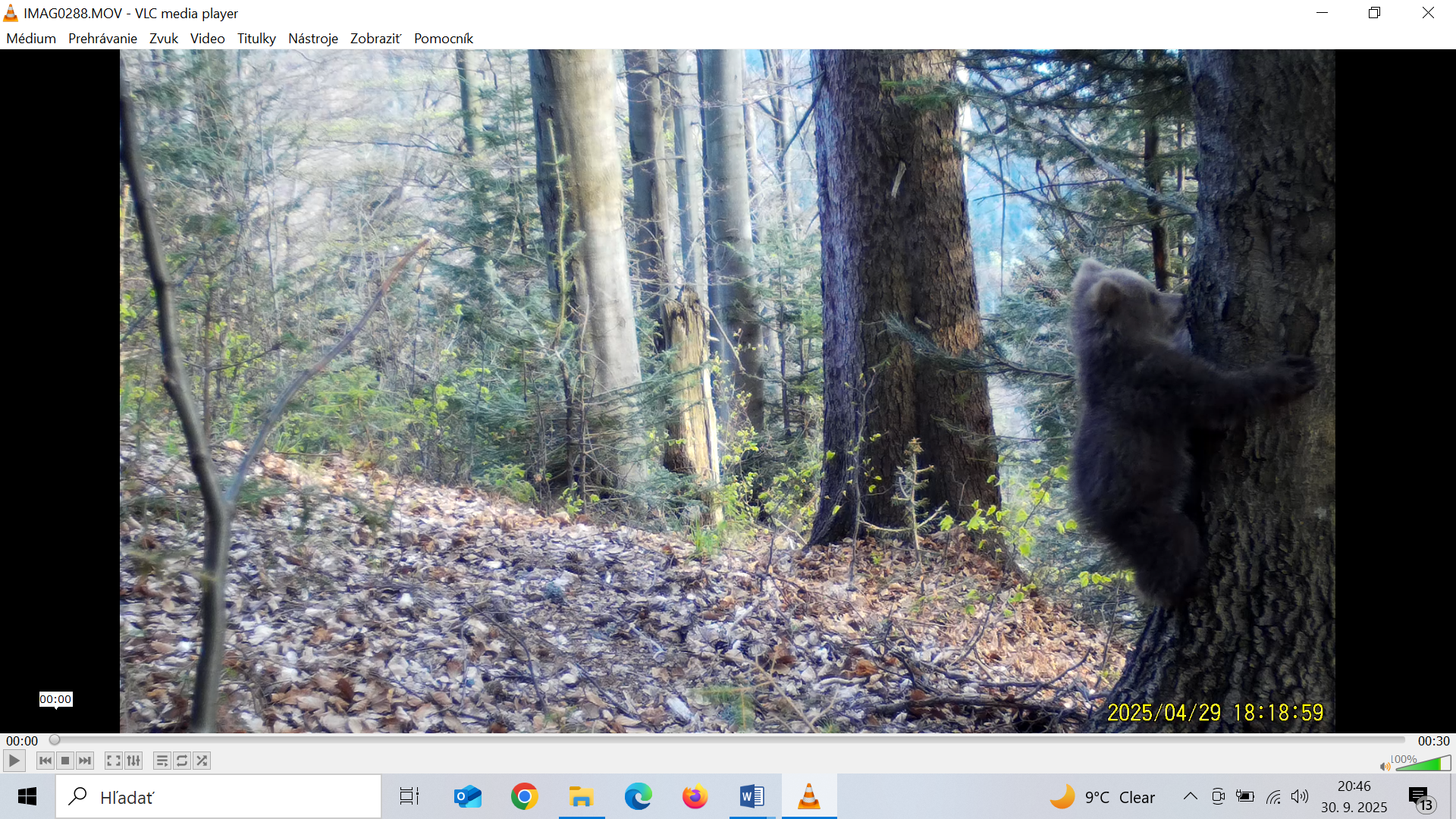
The EVOLVEO StrongVision PRO 4G is a motion-activated camera trap designed for remote wildlife monitoring. It operates using a passive infrared (PIR) sensor that detects movement and body heat within a defined detection zone. When triggered, the camera captures photographs or short videos, which are automatically timestamped and stored on a memory card.
The integrated 4G connectivity enables remote image transmission to a mobile device or server, allowing near real-time monitoring without the need for frequent on-site visits. Infrared night vision supports nocturnal observations without visible light, minimizing disturbance to wildlife.
The integrated 4G connectivity enables remote image transmission to a mobile device or server, allowing near real-time monitoring without the need for frequent on-site visits. Infrared night vision supports nocturnal observations without visible light, minimizing disturbance to wildlife.
Constraints
- Primarily detects medium to large animals generating sufficient heat and movement.
- Limited detection range and fixed field of view.
- Small animals, birds in flight, insects, or bats are rarely recorded.
- Performance influenced by temperature, weather, and vegetation movement.
- High-traffic areas may lead to rapid memory card saturation.
- Battery life limits long-term deployment.
- Risk of theft, vandalism, or animal damage.
- 4G transmission depends on network coverage; remote mountain areas may lack signal.
- Behavior and interactions are captured opportunistically rather than systematically.
Requirements
- Camera trap unit with PIR motion sensor and infrared night vision
- Batteries (rechargeable or disposable) and power management strategy
- Memory cards for photo and video storage
- Mounting equipment (straps, locks, tree mounts, protective housing)
- SIM card and 4G subscription for remote data transmission (if applicable)
- Skills in site selection, camera configuration, and maintenance
- Secure positioning to prevent theft or wildlife interference
- Computer or cloud storage for data management
- Software for image processing, species identification, and time-based analysis
- GIS tools for mapping camera locations and spatial data interpretation
- Regular firmware updates and technical maintenance
Tool Impact
Camera traps have a very low environmental impact, as they are passive and non-invasive monitoring tools. They do not require capture, tagging, or direct interaction with wildlife. Infrared night vision avoids visible light disturbance. Minor environmental effects may occur due to human presence during installation and maintenance, particularly in sensitive habitats. When carefully placed and regularly monitored, camera traps provide valuable ecological data with minimal ecological disturbance.
Best Practices
-
Within the Interreg CE project HUMANITA, camera traps were deployed to monitor wildlife presence and visitor activity in Malá Fatra National Park. Two camera types were used strategically:
- SPROMISE S 308 units operated primarily at night near frequently visited areas to reduce potential disturbance.
- EVOLVEO StrongVision PRO 4G units operated continuously in areas with low human presence to monitor undisturbed wildlife activity.
- High-intensity human activity sites
- Hunting trails
- Animal trails
- Protected areas
- Winter dens
Helpful hints to use the tool proficiently
- Avoid placing cameras in dense vegetation; moving branches can cause false triggers.
- Clear the immediate foreground to reduce unnecessary image capture.
- Test detection angle and height before final installation.
- Use protective housings and locks to reduce theft risk.
- Check battery status frequently, especially in extreme cold or heat.
- Expect reduced battery life in winter conditions.
- Verify mobile network coverage before relying on 4G transmission.
- In remote mountain valleys, plan for physical data retrieval if no signal is available.
- Schedule regular technical inspections; long unattended deployments increase failure risk.
- Use alternative power solutions (e.g., external battery packs or solar panels) for long-term monitoring.
- Document exact installation height, orientation, and habitat type for data comparability.
Specification
| Category | Device / Key |
| Properties |
Sensor
Small/light
Can be used in online/live mode
|
| Range |
close range
local
|
Linked tools
| Category | Tool title and description |
Study object
|
Study focus
|
Work step
|
Tool purpose
|
Classic | Professional | Free to use | Experimental |
|
Camera traps for visitor monitoring
Passive recording of human presence along trails and access points using motion-triggered camera traps. |
|
|
|||||||
|
MegaDetector Video Counting
Adapted MegaDetector algorithm (AI model that identifies animals, people and vehicles in camara trap images) to count animals, people and vehicles in short videos. |
|
|
Gallery
The gallery is empty.
Legend
Study objects
Microbiota
Humans
Animals
Vegetation, Funghi & Lichen
Habitats
Study focus
Anthropogenic factors and impacts
Biodiversity (Species populations and Community Composition)
Ecosystem State, Structure and Functioning
Work steps
Presentation
Data collection
Plot establishment
Data analysis
Data archiving
Tool categories
TBD
Device
Software
Manual / Guideline / Framework
Tool purposes
Spatial Data
Numeric and Alphanumeric Data
Audio Data
Genetic Data
Photo/Video Data
Non Data generative
Chemical Compound Data