
Amphibian Disease Monitoring Protocol
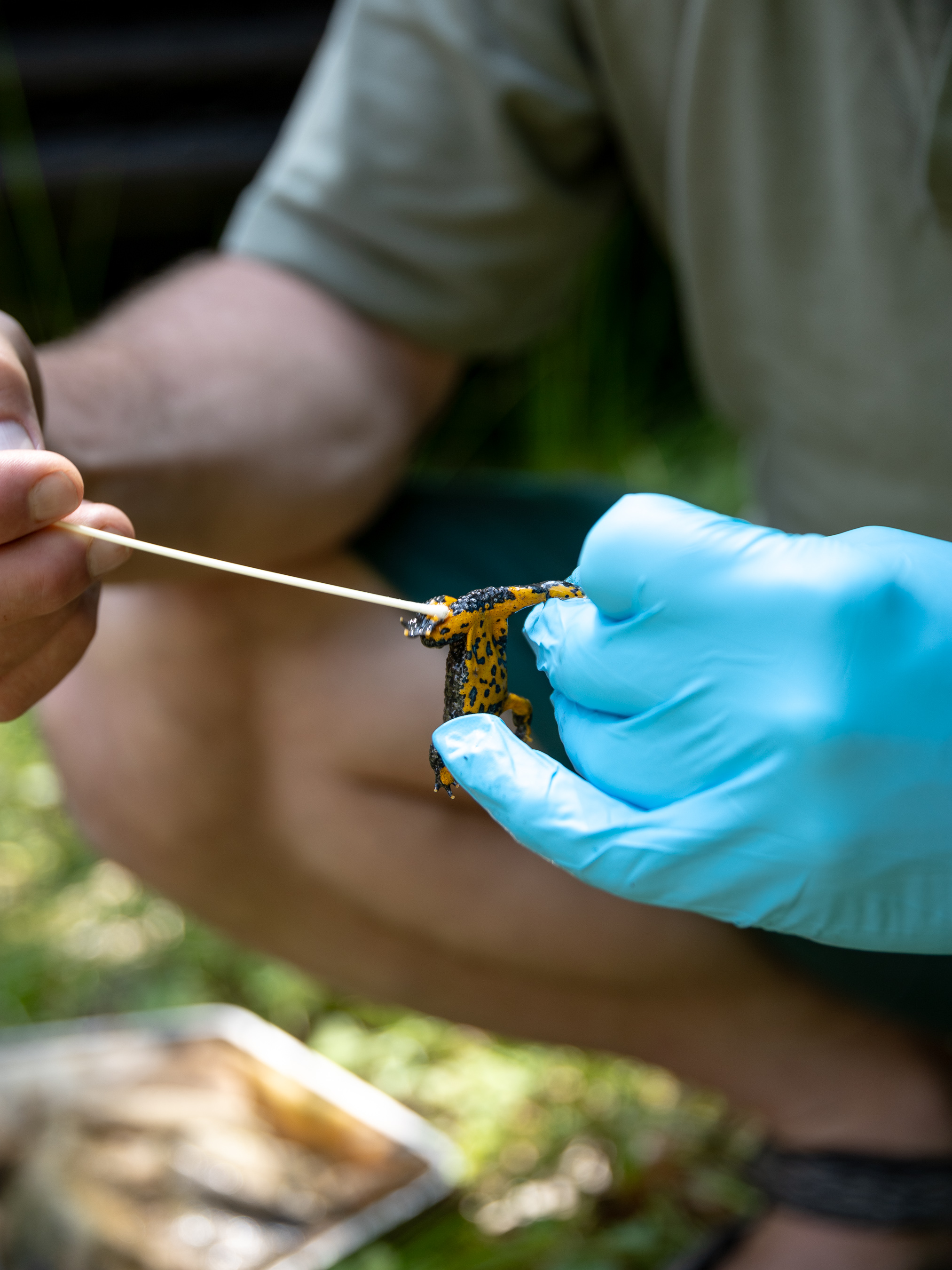
Amphibian monitoring
Amphibian monitoring
Image source: BNPD Archives 2025 - All rights reserved
Content
Molecular diagnostic toolkit for detecting and monitoring amphibian pathogens (chytrid fungus and ranavirus) in field-collected samples using real-time PCR methodology.
Classification
11
7
Study object
Vegetation, Funghi & Lichen
Animals
Habitats
Microbiota
Humans
Indicators
Amphibians
Forest
Wetlands
Hikers
Bikers
Lakes and Pools
Motor vehicles
Rivers, Streams and Creeks
Funghi (incl. Lichen)
Viruses
Bacteria
Study focus
Anthropogenic factors and impacts
Biodiversity (Species populations and Community Composition)
Ecosystem State, Structure and Functioning
Precise focus
Species abundance
Pollution
Land-use and Land-use change
Visitor Monitoring (distribution, economics and profiling)
Species distributions
Water quality and composition
Natural Hazards / Ecosystem disturbances
Key characteristics
Work step
Data collection
Data analysis
Tool purpose
Numeric and Alphanumeric Data
Genetic Data
Properties
Professional
Experimental
Keywords
HUMANITA
Chytridiomycosis
qPCR
Ranavirus
Molecular diagnostics
Pathogen monitoring
Tool description
The Amphibian Disease Monitoring Protocol is a comprehensive methodology for detecting and quantifying pathogenic infections in amphibian populations, specifically targeting two major infectious pathogens: the chytrid fungus Batrachochytrium dendrobatidis (Bd) and ranavirus. The protocol combines field sampling techniques with molecular laboratory diagnostics to assess pathogen presence and infection intensity in relation to tourism impacts and visitor frequency in protected areas.
The toolkit employs non-invasive or minimally invasive swab-based sampling from living amphibians: skin swabs from the yellow-bellied toad (Bombina variegata) for chytrid fungus detection, and oral swabs from the common frog (Rana temporaria) for ranavirus detection. Real-time quantitative PCR (qPCR) methodology with known standard curves (1-1000 genome equivalents for Bd; 3-30,000,000 genome equivalents for ranavirus) enables precise detection and quantification of pathogen loads. All samples are processed with strict biosecurity protocols including equipment disinfection and single-use sterile materials to prevent cross-contamination between sites.
The protocol integrates amphibian pathogen data with visitor flow data derived from anonymized fitness app tracking (Strava Metro) to assess correlations between tourism activity levels and pathogen infection rates. This allows researchers to evaluate whether tourism-related disturbance and increased human traffic contribute to pathogen transmission within protected amphibian populations.
Constraints
- Sampling conditions dependent on amphibian activity patterns and seasonal availability.
- Weather-dependent sampling success (activity patterns of target amphibian species affected by temperature and precipitation).
- Bd detection limited to species susceptible to chytridiomycosis; some species may be asymptomatic carriers.
- Ranavirus detection in oral cavity may not capture systemic infection in all cases.
- Sample collection requires trained personnel to ensure animal welfare and protocol compliance.
- Requires specialized molecular laboratory facilities with real-time PCR equipment and expertise.
- Limited to amphibian species accessible through non-lethal swabbing (primarily aquatic/semi-aquatic species).
- False negatives possible if infection is at very low intensity or below detection threshold.
- Strava Metro partnership required for visitor data integration (not available to all research organizations).
Requirements
In the field:
- Access to protected areas with target amphibian populations
- Field equipment: disinfectable boots, sterile gloves, hand sanitizer, collection containers
- Training in molecular techniques and animal handling with amphibian welfare compliance
- Access to reference laboratory with validated protocols (University of Oviedo, Spanish Research Network - CSIC recommended)
- Standard reference materials: Bd genome equivalents (1-1000 range) and ranavirus genome equivalents (3-30,000,000 range)
- Real-time PCR (qPCR) thermocycler and laboratory infrastructure
- Molecular biology equipment for DNA/RNA extraction (homogenizer, centrifuge, freezer capacity)
- Sterilization equipment (autoclave or equivalent disinfection supplies for field gear)
- Laboratory consumables: sterile swabs, extraction kits, PCR reagents, positive controls, primer sets
- Partnership agreement with Strava Metro for tourism data access (for tourism correlation analysis)
- Data management system for results tracking and statistical analysis
Tool Impact
The amphibian disease monitoring protocol has low direct environmental impact, as it relies on non-invasive or minimally invasive swab sampling of live individuals and does not require permanent infrastructure. Handling of amphibians may cause temporary stress, but impacts are minimized through standardized protocols and trained personnel.
Strict biosecurity measures (e.g., equipment disinfection and single-use sterile materials) are essential to prevent unintentional pathogen spread between individuals or sites. When properly implemented, the protocol poses minimal ecological disturbance and contributes to conservation by enabling early detection of infectious diseases linked to environmental pressures such as tourism.
Best Practices
-
The Interreg CE project HUMANITA experience demonstrates successful integration of amphibian disease monitoring with tourism impact assessment.
- High chytrid prevalence (54.16%) observed at accessible hiking route (Glóbusz út) compared to lower prevalence (23.81%, 11.90%) at less-frequented sites; however, wild ungulates and forestry vehicle traffic also significantly influence local pathogen distribution—tourism is significant but not sole driver.
- Ranavirus was not detected in field samples despite previous disease mortality observations; oral swabbing may not capture all infections; consider supplementary sampling of moribund animals if available.
- Partnership access to molecular laboratory facilities (CSIC, Oviedo University) was essential for cost-effective processing of sample batches.
Helpful hints to use the tool proficiently
In the field
- Seasonal timing is critical: spring sampling for breeding frogs (May-June) captures adult populations in accessible breeding habitats; autumn sampling (September-October) necessary to supplement insufficient spring breeding; toad populations remain accessible year-round if water is available.
- Coordinate sampling with peak activity periods of target species (spring breeding for frogs; year-round for toads with water availability).
- Document weather conditions at time of sampling (affects amphibian activity and detection rates).
- Follow strict biosecurity protocol: disinfect boots and equipment between sampling sites using 70% ethanol or equivalent, establish detailed standard operating procedures for each field team.
- Single-use sterile gloves changed between individual animals to prevent cross-contamination.
- Consistent swabbing technique using firm circular motion for 10-15 seconds to ensure adequate cellular material collection.
- Multiple sampling sites (2-3 per treatment level) recommended to account for local variation in infection patterns unrelated to tourism.
- Maintain cold chain from field collection through laboratory processing.
In the lab
- Establish partnership with reference laboratory for protocol optimization and troubleshooting.
- Validation against known positive and negative controls with every PCR run.
- Duplicate testing of all field samples; only classify as positive if both reactions detect pathogen.
- Establish baseline infection prevalence before interpreting temporal changes.
- Include positive control sites (known high infection) and negative control sites (unimpacted reference areas) in monitoring design.
- Quarterly quality assurance checks of PCR standards and primer functionality.
For correlation with visitor data
- Cross-validate with site-specific visitor data (Strava Metro, automatic counters, mobile phone data) to account for confounding factors in infection patterns.
- Visitor flow proxies (Strava Metro, mobile phone data) provide non-invasive baseline assessment of relative tourism pressure; absolute visitor numbers require calibration with ground-truthed counts.
- Data integration requires careful interpretation—correlation between tourism and infection does not establish causation; consider alternative transmission vectors (wildlife, water chemistry, climate).
Specification
| Category | Manual / Guideline / Framework |
| Type |
field guideline
methodology
|
| Range |
local
regional
multiple scale
|
Linked tools
| Category | Tool title and description |
Study object
|
Study focus
|
Work step
|
Tool purpose
|
Classic | Professional | Free to use | Experimental |
|
real-time PCR / qPCR machine
A real-time PCR thermal cycler performs amplification of DNA or RNA from a sample. This device also provides quantification of the number of matching DNA sequences and is therefore synonymously called a qPCR machine. |
|
|
|||||||
|
Strava Metro
Strava Metro is a data service provided by Strava that uses aggregated and anonymized activity data (e.g. walking, running, cycling) from users of the Strava app to analyze movement patterns. |
|
|
Gallery
Images
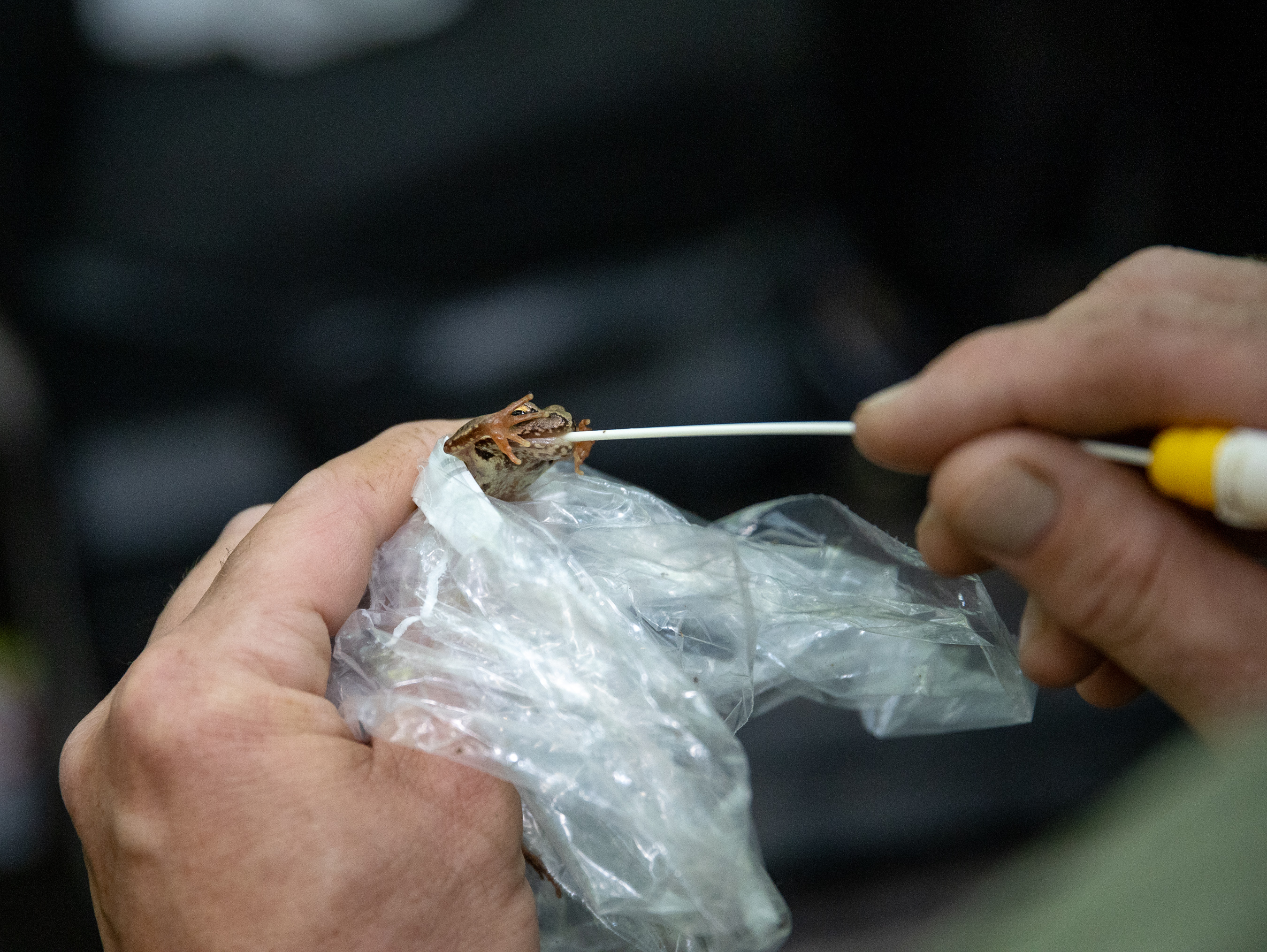
Amphibian monitoring
Image source: BNPD Archives 2025 - All rights reserved
Legend
Study objects
Microbiota
Humans
Animals
Vegetation, Funghi & Lichen
Habitats
Study focus
Anthropogenic factors and impacts
Biodiversity (Species populations and Community Composition)
Ecosystem State, Structure and Functioning
Work steps
Presentation
Data collection
Plot establishment
Data analysis
Data archiving
Tool categories
TBD
Device
Software
Manual / Guideline / Framework
Tool purposes
Spatial Data
Numeric and Alphanumeric Data
Audio Data
Genetic Data
Photo/Video Data
Non Data generative
Chemical Compound Data