
Dendrochronological analysis
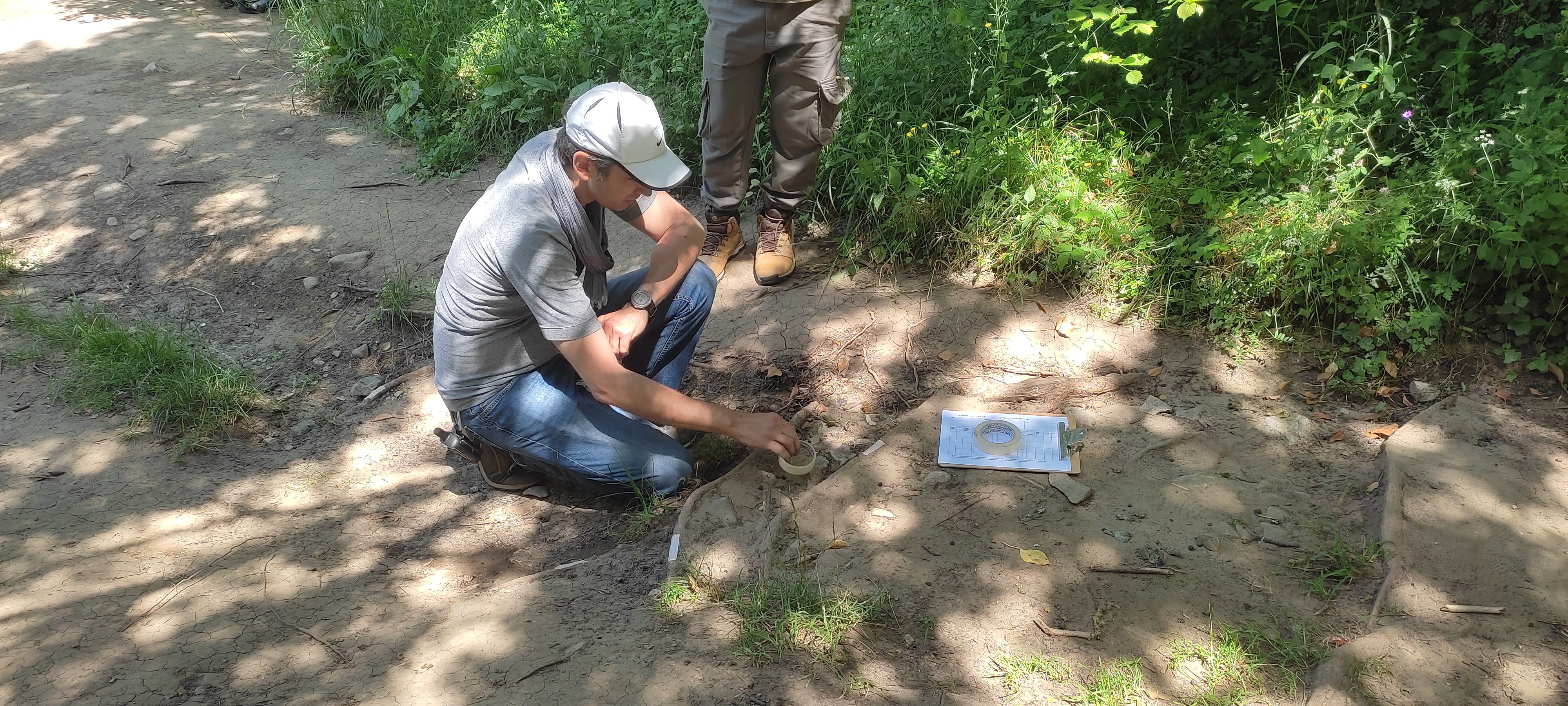
Dendrochronology root sampling
Dendrochronology root sampling
Image source: Valletta © 2025 All rights reserved
Application of tree-ring analysis on exposed roots to estimate long-term average soil erosion rates along trails.
Classification
2
2
Study object
Habitats
Indicators
Forest
Shrubland
Study focus
Anthropogenic factors and impacts
Ecosystem State, Structure and Functioning
Precise focus
Land-use and Land-use change
Other Ecosystem related factors
Key characteristics
Work step
Data collection
Data analysis
Tool purpose
Numeric and Alphanumeric Data
Properties
Classic
Professional
Keywords
Terrestrial - aboveground
HUMANITA
Erosion
Soil
Tree-growth stress
Dendrochronology
Tool description
Dendrochronological analysis of the trees’ exposed roots along the trails can provide estimations of past soil erosion rates. This technique provides retrospective information on erosion dynamics over decades, complementing short-term monitoring methods. The approach is particularly valuable for understanding cumulative impacts of trail use where historical baseline data are lacking. Moreover, by analyzing tree-ring growth along ski runs may evidence growth stress reflected in tree-ring growth and stable isotopes, in response to forest openings and fragmentation.
Constraints
- Applicable only where suitable trees and exposed roots are present.
- Provides average erosion rates rather than high-resolution temporal dynamics.
- Requires specialist expertise for sampling and interpretation.
- Potentially invasive if not carefully designed due to physical sampling collection.
Requirements
- Experienced dendrochronologist and appropriate sampling equipment
- Selection of suitable trees and control sites
- Laboratory facilities for sample preparation and analysis
- Permits for sampling within protected areas
- Digital terrain model for microtopographic measures
- Local meteorological series or monitoring
Tool Impact
Dendrochronological analysis may involve localized and minor physical impacts on individual trees or exposed roots due to sampling activities. If not carefully designed, this can cause stress or damage to sampled specimens. However, when applied selectively and following established protocols, impacts on flora and associated fauna are negligible.
Helpful hints to use the tool proficiently
- It is recommended that a high-resolution DTM of the trail where active erosion processes are present is provided before root sampling.
- The estimation of soil erosion rates has to be conducted by sampling at least 10 roots per site.
- Monitoring of local temperature and precipitation may enhance the interpretation of soil erosion and is fundamental for the analysis of climatic impacts on tree growth along ski runs.
- The analysis of tree-growth stress along ski runs needs the presence of a control site in an undisturbed environment, and tree growth stress may be analyzed both in tree-ring growth patterns and stable-isotope. chronologies. If multiple sampling campaigns are needed in the same site, it is advisable to verify the potential occurrence of other invasive activities (e.g., passage of heavy machinery, maintenance works, etc.) that could modify the conditions of the area of interest.
- A geomorphological analysis is also advised to disentangle the human impact on trails from those by natural processes (i.e.: run-off).
Specification
| Category | Manual / Guideline / Framework |
| Type |
field guideline
guideline
methodology
|
| Range |
local
|
Gallery
The gallery is empty.